Sorting by

×
Lincoln County Master Gardener™ Association

The Five Kinds of “Bulbs” (Audio)

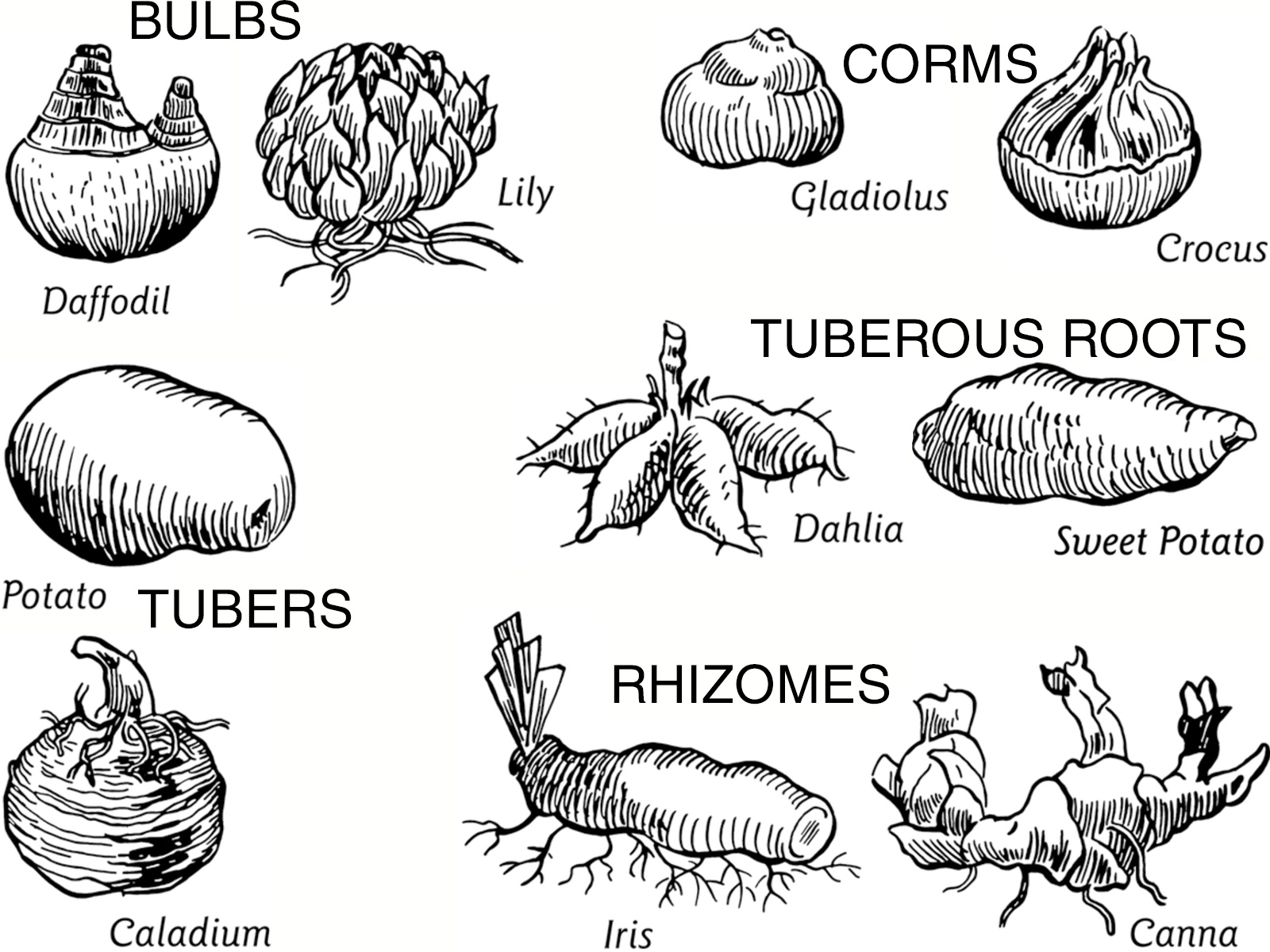
Sometimes we have too much material when editing our KYAQ radio show and important information doesn't make it into the episode. In this case, Master Gardener Joan Crall does a wonderful job of describing the five kinds of "bulbs" that produce spring displays of flowers. Master Gardener Ross McCann is the interviewer. Joan covers true bulbs, corms, tubers, tuberous roots and rhizomes.

Bulb

  • Structure: A bulb is composed of modified, fleshy leaves (scales) wrapped around a central bud, with a basal plate at the bottom.
  • Function: Stores energy and nutrients to survive and grow a new plant.
  • Examples: Tulips, daffodils, lilies, and onions. 

Corm

  • Structure: A solid, swollen underground stem with a papery outer covering (tunic). It is not made of layered leaves.
  • Function: Stores food reserves in the stem tissue.
  • Examples: Crocus, gladiolus, and freesia. 

Tuber

  • Structure: A swollen stem or root that stores food. It has "eyes," which are buds that can sprout new shoots.
  • Function: Stores nutrients for the plant's growth.
  • Examples: Potatoes and caladium (stem tubers) and dahlias (tuberous root). 

Rhizome

  • Structure: A horizontal stem that grows underground or along the surface, with roots and shoots developing from nodes along its length.
  • Function: Serves as both a storage organ and a primary means for vegetative reproduction and spreading.
  • Examples: Ginger, iris, and canna.
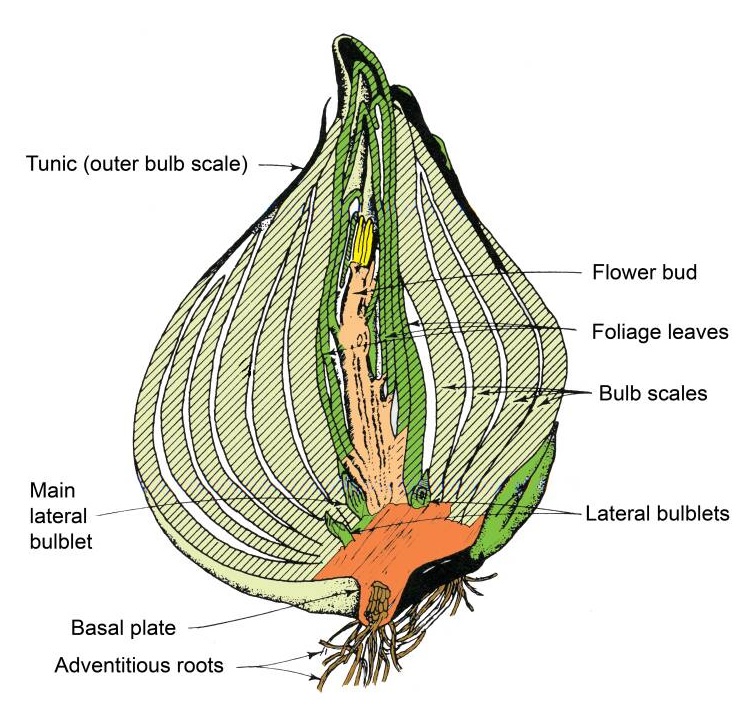
In cross section, a true bulb has all of the parts visible that will form the whole plant. Diagram courtesy of University of Florida. Featured line drawing courtesy of Thursd.

Composting (KYAQ Audio)

In this edition of the Lincoln County Gardner, Ross McCann talks with Master Gardener Cathi Block about composting. She makes it easy to get started in this sometimes-confusing process.

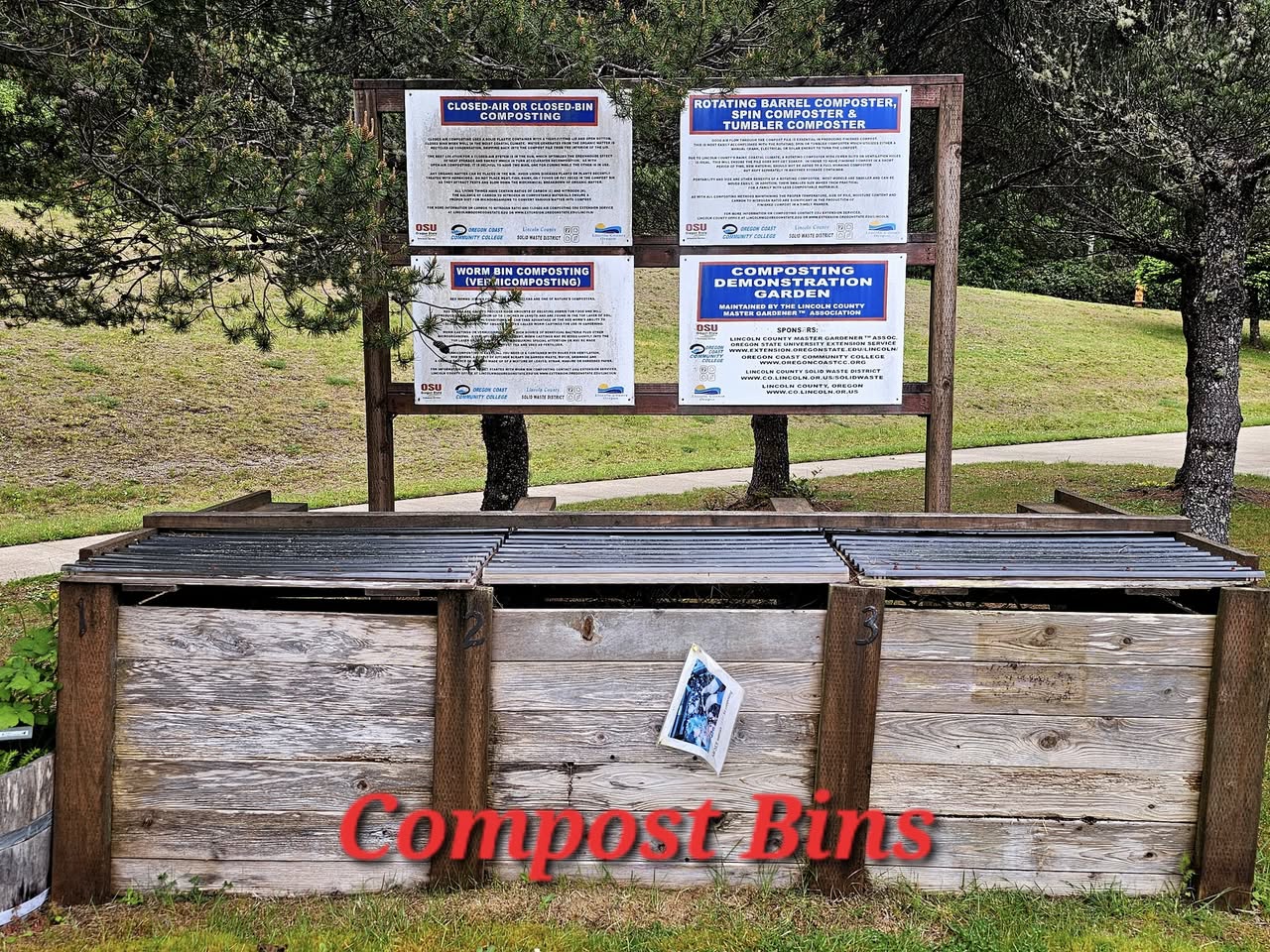
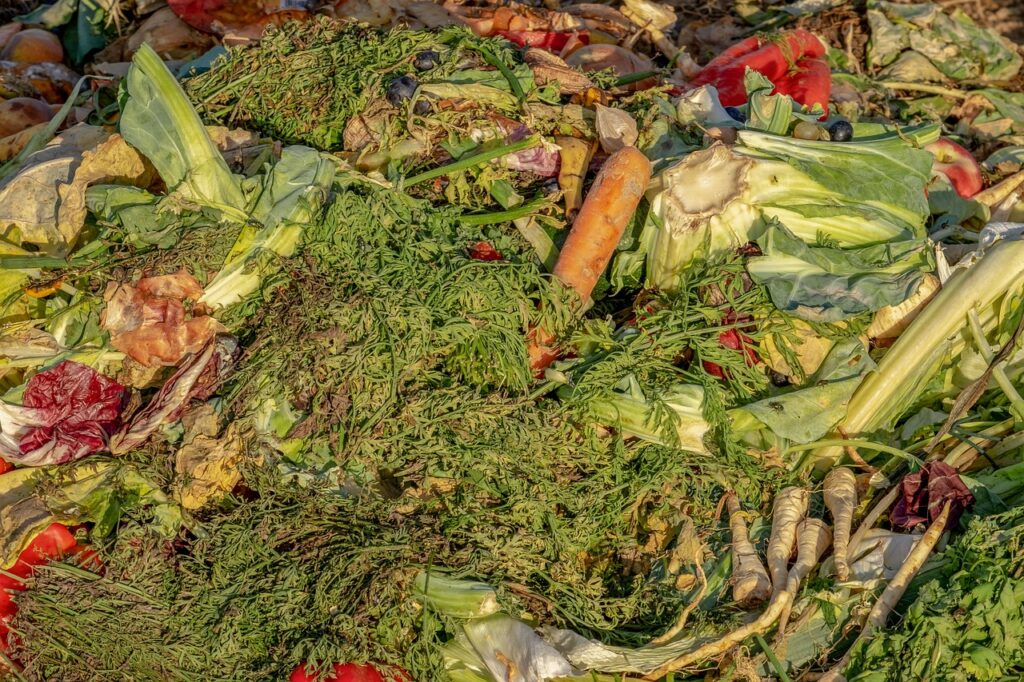
A great place to start composting is with your own kitchen trimmings and waste. Image by Couleur from Pixabay. Featured image from the South Beach Demonstration Garden's 3-stage composting bins. Image provided by Steve Vogel.

Master Gardener Program (KYAQ Audio)

In this edition of the Lincoln County Gardner, Ross McCann is on vacation, so Master Gardener Larry King talks with OSU Extension Service employee Stormi Dykes about the Master Gardener program. Stormi administers the program for Lincoln County.

Featured image of gardener by Anil sharma from Pixabay.

Holiday Blooming Bulbs (KYAQ Audio)

In this edition of the Lincoln County Gardner, Ross McCann talks with Master Gardener Joan Crall about growing bulbs for winter holiday display. Both amaryllis (Hippeastrum) and paperwhites are discusses.


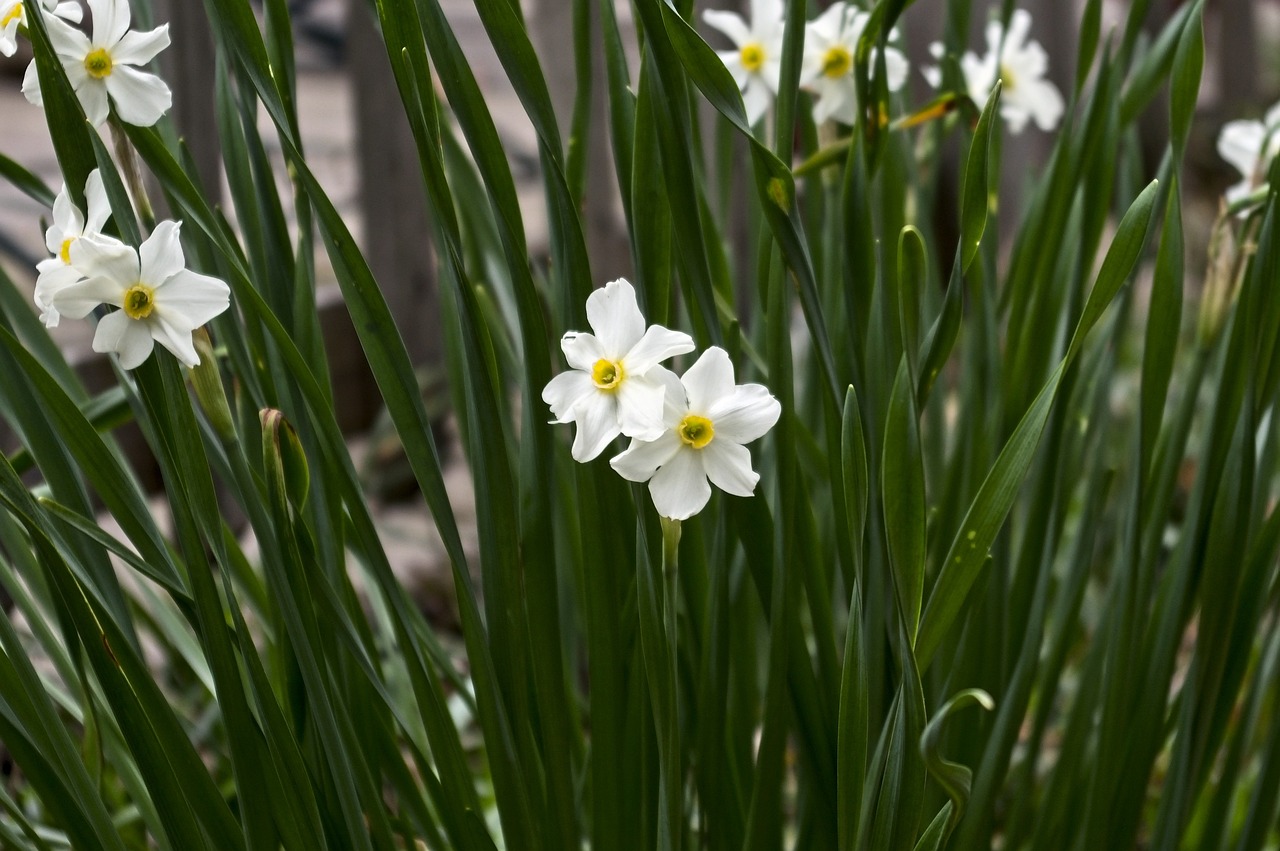
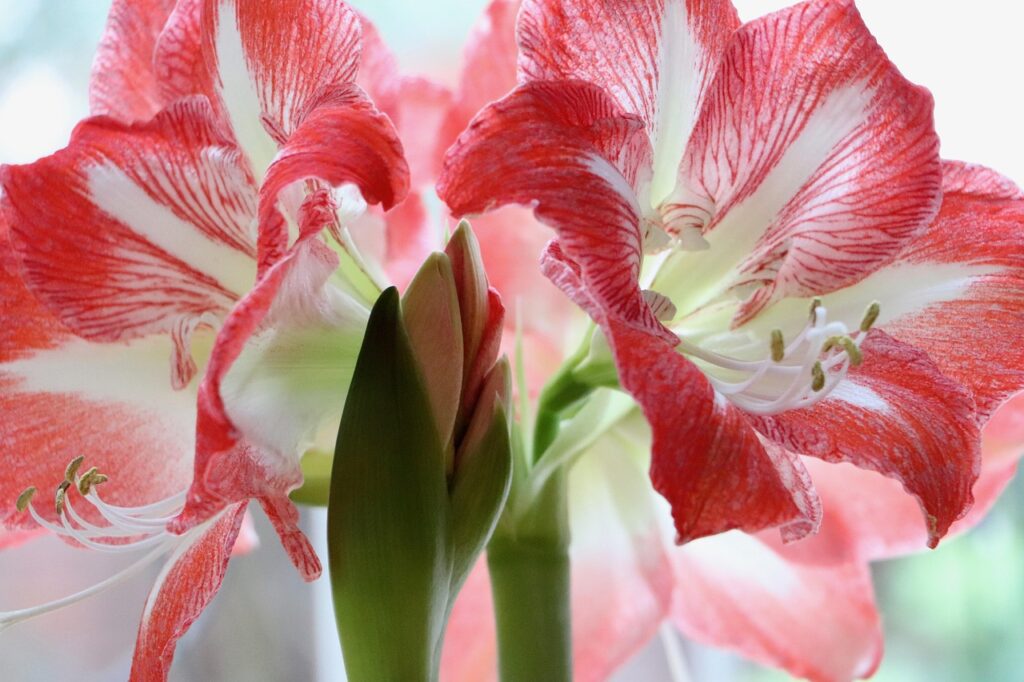
Hippeastrum unnamed variant, image by Annette Meyer from Pixabay. Featured image of Narcissus tazetta 'Ziva' growing outdoors in Arkansas, but more commonly "forced" indoors for winter display. Image by Mike Goad from Pixabay.
Fall-Planted Bulbs (KYAQ Audio)

In this edition of the Lincoln County Gardner, Ross McCann talks with Master Gardener Joan Crall about the many kinds of bulbs that you can plant in the fall for spring bloom. She covers selection, planting and long term care.


Narcissus triandrus 'Thalia' is one of thousands of varieties of "daffodils." Thalia's flower is orchid shaped, scented and naturalizes well in Lincoln County. Photo courtesy of Colorblends Wholesale Bulbs. Featured image of Wooden Shoe Tulip Festival in Canby, OR, courtesy of Wooden Shoe Tulip Farm.

Carnivorous Plants (KYAQ Audio)

In this edition of the Lincoln County Gardner, Ross McCann talks with Master Gardener Pam Crobar about creating a bog garden featuring carnivorous plants. Many of the plants are native to coastal Oregon.

You can create a simple carnivorous bog using a container. Image by Steve Vogel. Featured Image of Darlingtonia State Natural Site in Florence, OR. Photo by Oregon State Parks.

Accessible Gardening (KYAQ Audio)

In this edition of the Lincoln County Gardner, Ross McCann talks with Master Gardeners Julie Roth-Carter and Martha Mills about creating gardens that are accessible to everyone. This includes garden planning and making modifications to gardens for specific accessibility Concerns.

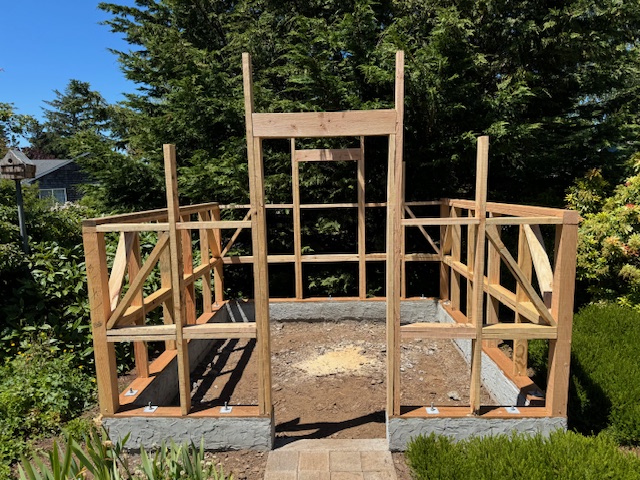
Tall raised beds with access on all sides can make gardening easy for people with mobility restrictions. Image by Jeyaratnam Caniceus from Pixabay. Featured image of accessible wheelchair garden Image by Francisco Zuasti from Pixabay
Bugs (KYAQ Audio)

In this edition of the Lincoln County Gardner, Ross McCann talks with Master Gardener Janice Smith about insects and other garden "bugs." They are mostly beneficial to your garden, so learn how to live with them and control the unwelcome ones.

There are many beneficial insects including the lady bug or beetle (Coccinella septempunctata). Image by hartono subagio from Pixabay. Featured image of green stink bug (Chinavia hilaris) on dusty miller (Jacobaea maritima) by Monika from Pixabay.

Tips for Preventing a Slug Takeover (KYAQ Audio)

You can also listen to Julie and Ross McCann discuss slugs/snails and their control on KYAQ radio. Here's the recording of their interview:

If you've spent any time gardening in the Pacific Northwest, you are probably very familiar with slugs and the damage they cause to plants. These hungry little mollusks love our damp, temperate environment. Whenever we have wet weather, we're likely to find them out and munching away on our most delicate plants, leaving holes in leaves and the telltale slime trail behind them.

As gardeners, we all have to decide how much damage we are willing to tolerate from pests. Slugs eating a few holes in plants may be OK, but if they start to eat entire plants and all of your seedlings, that's a problem. Our native slugs, such as banana slugs, are important parts of the ecosystem, digesting decaying plant matter and putting nutrients back into the soil. They are rarely a problem in gardens. It's the invasive varieties like gray field slugs, brown slugs, and leopard slugs that are very damaging to home gardens and commercial crops.

Luckily, there are some research-backed methods you can use to minimize slug damage. In this article, we briefly cover slug anatomy and habitat, provide tips on how to make your garden less slug friendly, and give details on how to use a simple bread dough slurry to attract and kill them. Slugs and snails are closely related and so the recommendations for slugs apply to snails as well.

snails-2625006_640
IMG_9759-1.JPEG

It helps to understand some basics about the slugs lifestyle. Slugs are gastropods, gastro meaning stomach and pod meaning foot. Basically, they are walking stomachs and yes, they are coming for your hostas and juicy new lettuce sprouts. They have two sets of tentacles, one to sense light and one for taste and smell. They have a radula, small file-like teeth used to grasp and chew, and make holes in plant leaves as they eat. Perhaps their most famous characteristic is the protective slime coating that helps keep them from drying out. You can often identify slug damage by finding slime trails on the ground and on plants. The slime coating also gives clues about their preferred habitat. They need moist environments and are active mostly at night or when it is cloudy. You'll generally find more of them in the spring and fall.

Another critical point to know is that they are extremely prolific. They are hermaphrodites, meaning they have both male and female reproductive organs. Every animal can lay eggs, and they lay up to forty eggs at a time. Even though slugs only live for 6-18 months, they can lay over 500 eggs in that time. That's a lot of slugs! It also explains why it is so important to start managing their numbers as soon as you start noticing signs of slugs, like those slug trails, and damage on your plants. They (and their eggs) overwinter in the soil and can quickly decimate plants when they emerge in the spring.

There are things you can do to make your garden less friendly to slugs. You can minimize the damp areas of your garden by limbing up trees and shrubs to get more light underneath them, keeping leaf litter to a minimum, and using mulch. You can also encourage their predators. Garden snakes, salamanders, frogs, and some beetles will eat slugs, as will birds, including chickens and ducks. Even so, unless your garden is very dry all year, you'll likely have at least some slugs.

One relatively easy and cheap way to kill slugs is to use a bread dough slurry. The slurry is a similar idea to using beer traps but lets you skip the step of hauling home large quantities of cheap beer and getting odd looks from your neighbors. The advantage of using the bread dough slurry is that it uses commonly found, inexpensive ingredients. The disadvantage is that you do have to monitor it and make sure you have it in a place where you are catching slugs. It can smell, especially when it gets warm. It isn't toxic to other animals but be sure to keep it away from dogs.

IMG_8636-3.JPEG

An angled Container makes easy access to "slug beach."

To make the bread dough slurry, mix 1 cup of flour, 1 package of yeast, and 2-3 cups to warm water. You can easily double the recipe. Collect some clean plastic or glass containers--large yogurt containers work well--and pour in a couple inches of slurry. For each container, dig a hole and place the container deep enough that the rim is at soil level. You can also dig a smaller hole and put the container in at an angle, making more of a beach for the slugs to crawl in. As noted, slugs do have a sense of smell and are attracted to the slurry. They'll fall in and drown. Replace the slurry every few days, or at least remove the dead slugs and add more water if it has dried up.

If you have a serious slug problem or a particular plant you are trying to protect, there are a couple extra steps you can take. Put the warm slurry down in the evening or early morning and come back an hour later to check it. Chances are there are many slugs heading for that party. Wearing gloves (slug slime is really hard to wash off your hands), pick off all the slugs. Be sure to check around the damaged plants as well, and you may need to do this for several nights in a row. Some will get caught in the slurry, but this helps you catch any that try to escape.

There are many ways to get dispose of the live slugs, but one easy way to kill them quickly is to fill a tall jar, like a peanut container, with water and a squeeze of dish soap. Put the slugs right into the jar and they'll die quickly.

So, keep your eye out for slugs and start treating them as soon as you see signs of them. By providing fewer places for them to live, encouraging predators, putting yeast slurry in strategic spots, and hunting them down, you can help your garden be less of a slug buffet.

You can also listen to Julie Eriksen talk about slug and snail management on a radio segment from KYAQ 97.1 FM.

IMG_9760-2.JPEG

References:

Container Gardening (KYAQ Audio)

In this edition of the Lincoln County Gardner, Ross McCann talks with Master Gardener Mary Jane Bonelitz about gardening in pots, planters and other containers. She describes how to choose your container, soil composition and more.

Carnivorous container bog in South Beach Demonstration Garden. Photo by Steve Vogel. Featured image of succulent planter by Larry King.